

About
Two of Our Heroes
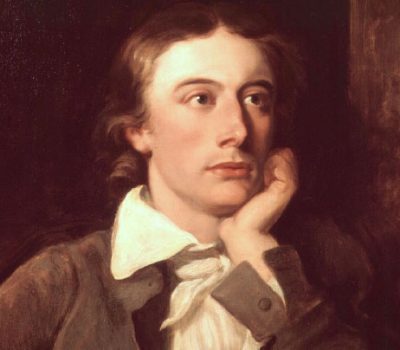
“Beauty is truth, truth beauty, – that is all
Ye know on earth, and all ye need to know…”
Ode to a Grecian Urn
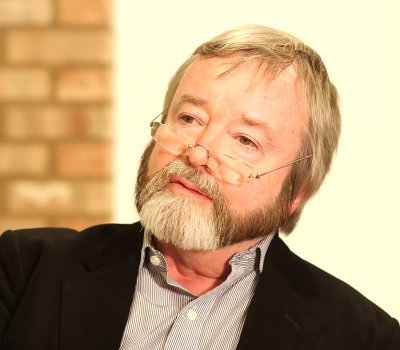
“Emotion is inseparable from the body in which it is felt, and emotion is also the basis for our engagement with the world.”
author of The Master and His Emissary
We have grown up in a world dominated by science, technology and world capitalism. Its dazzling gifts have turned us into anxious consumers on an over-populated, over-heated and polluted planet.
We live in a technocratic age, at the dawn of a new AI era, but these types of hi-tech solutions won’t provide the answers on how we can live peacefully and sustainably in our global community.
All around the world rise the spires of churches, mosques and temples: evidence of the human need for emotional and moral understanding of our place in the world. They are the architecture of human aspiration.
Some of us cannot believe in the old Gods any longer in the old literal ways. But to survive we will need to use both sides of our intelligence together, our brain and our heart.

Have you seen this diagram of the left and right brain? Dr Iain McGilchrist took the scientific theory and turned it into a sharp critique of recent western culture. He showed that Left Brain thinking is purely linear and technical, to discover HOW to achieve a specific task. The Right is emotional and intuitive – sizing up the whole situation and telling us WHAT needs doing.
McGilchrist has helped us to realise that we need not just rational thinking and good science; we also need to re-discover our emotional wisdom. In order to find peace with ourselves, our fellow humans and the living world we will have to use intuition and imagination. We need to be open to metaphor, stories, rituals, and poetic meanings.
The key insight is that this wider mode of thinking and feeling is not in conflict with science.
Learning from McGilchrist, the Just Beauty blog will showcase things we should still believe in. It will endorse valuable projects across the arts, politics, ecology and human awareness. The emotional and practical truths will turn out to be linked.
We will find the crossover line – where the truth of brave, excellent art meets the truth of practical projects to improve our society and to protect nature.
Our liberal democracies face a huge challenge from Donald Trump, the oil producer lobby and their Big Tech allies. Truth has been bent. In contrast, this will be a non-profit digital space where projects and ideas are independently assessed.
Please explore our pages, post your thoughts on our site – and share what you find with your own networks.
Our Co-Editors
Paul Entwistle
Paul's background and career were in Finance and Economics (LSE BSc (Econ) 1972).
He worked mainly for U.S. multinationals, culminating as Director of Finance for two companies.
His main post-retirement interest is Philosophy with a practical bent, orienting to Politics and Economics. Thus he presents some PPE knowledge, but without the illustrious degree!
He is a member of the Oxford OUDCE Philosophical Society and contributes to Bournemouth Humanists and U3A. Paul believes that the most worthwhile philosophy underlies and informs our everyday lives, and vice versa.
He takes a keen interest in current affairs and politics, and believes that a sound economy and suitable care for all in our Society are perfectly compatible, following the examples of successful North European countries.
Simon Bowden
Simon Bowden is a former BBC news journalist and broadcaster covering political and world affairs. He has degrees in Classics and English Literature from Oxford and feels that he is only now appreciating the significance of the ancient Greek myths and literature he studied.
He sees connections with the animist religions of indigenous peoples, and the wisdom they contain. And he thinks it’s time for us to complement our scientific and technical discoveries with learning emotional truths about ourselves and our place in the biosphere.
Since retiring, Simon has become increasingly worried by disinformation on social media which is undermining the world's democracies. In setting up this non-profit digital platform, he hopes to provide a showcase for trustworthy projects and to create a global community of ideas and like-minded people.
Imogen de la Bere
Imogen completed a Ph. D. at the University of Canterbury (NZ) on Elizabethan popular prose, but found no great call for this speciality, and changed course in technology, working at the bleeding edge of AI, combining this with theatrical criticism for a national magazine.
Y2K loomed into view! Imogen returned to her native England, where, as well as finding plentiful work, she published several novels with Cape. The siren call of the stage intervened; a founder member of OVO, she directed plays by Shakespeare, Chekhov, Pinter and her own, notably Boudicca at Verulamium, the first play in the Roman Theatre since Roman times. Recent plays have been the St Albans Mysteries, for the Friends of St Albans Cathedral.
When not writing poetry, plays and articles, she indulges in her passion for church architecture, stained glass and art galleries, travels too much, and crews the family yacht along the South Coast.
Kit Pearce
Despite working and volunteering in the public sector, Kit Pearce has lived a largely private and solitary life.
Calvinism shaped his outlook throughout his twenties. The intellectual challenges of an English and History degree (Newcastle Polytechnic, 1984) firmly closed that chapter (cue wide reading in rationalism, psychology etc). Following a post-graduate diploma (Newcastle University, 1989), he worked in social housing for twenty-five years, up to his early retirement in Dorset.
In the fifteen years since, his voluntary work (Dorset Mind, walking groups and Poole Museum) led to writing about local history.
An avid reader and life-long journaler, his influences and interests include the Bible, (as myth). Philosophy. Lots of fiction. Human biology. Neuroscience. ‘Stealth Stoicism’ (William B. Irvine). And forty years pondering how a twenty-first century ‘secular Taoist’ might allow the Tao te Ching to reshape his humanity. Now a Quaker community has become part of that ‘Way’, prompting writing about matters of ‘interiority’.
Estelle Price
Suheil Shahryar
Suheil Shahryar is a retired technologist. Throughout his entire career, he has worked with advanced information technologies, starting in oil exploration in the Middle East and ending in cybersecurity for the financial sector.
Following his retirement, he has dedicated himself in the search for human flourishing in harmony with nature. He is currently the Chair of United Nations Association Harpenden.
Bill Lockley
Prof. Bill Lockley is a scientist with over fifty years of research experience in both academia and industry. He regularly gives public lectures to schools/organisations to expand popular understanding of various areas of science. His professional expertise in chemistry is wide-ranging, with senior roles in analytical, biochemical, physical, pharmaceutical, synthetic and isotope chemistry. In addition to his professional expertise, he maintains a watching brief in the areas of quantum physics, abiogenesis, evolution and cosmology.
He is a keen promoter of Poetic Naturalism, a physicalist approach to seeking truth. By suitable coarse-graining of human knowledge, the proper concepts can be applied, harmoniously, at the appropriate levels, from fundamental physics to the more complex understandings of the human sciences, the humanities and the arts.
His current areas of interest are consciousness, the nature of truth, particularly scientific truth, and how phenomenology and personal perception relates to external reality. In this regard, he follows a physicalist perspective, believing that, too often, idealist interpretations of reality flow either from current ignorance, or from personal incredulity coupled to a failure of the imagination.
John Foster
John Foster is a BAFTA award-winning OFFIE nominated playwright and screenwriter. He has written many episodes for long-running TV series and created The Practice for Granada Television.
He scripted the Patrick Swayze movie Letters from a Killer together with feature movies for television. He has written extensively for theatre, with touring productions in the UK and Europe. He is co-founder of the Bournemouth-based new writing company, Doppelganger Productions.
Rob Abbot
Rob Abbott is a counsellor based in Sussex and Dorset. Until recently he was director of Arun Counselling in Littlehampton and now runs Chichester Counselling Services.
He has written books on key literary figures including Jane Austen and Thomas Hardy. His latest book is Child Development and the Brain published by Policy Press. He is interested in mental health, social and political issues and the environment.
Rachel Bowden PhD
I am in my mid-40s, and live with my son in the leafy outskirts of the city of Dresden in Germany. I work as a research associate at the local university, which is one of the top-ranking technical universities in Germany. I am based at the centre for teacher education and education research, where I am involved in various education for sustainability and international and intercultural education projects.
Before moving to Dresden, I had a career as an English language teacher, teacher trainer and education project manager with the British Council in Malaysia (west), Sri Lanka, Nepal and Malaysia (east). I chose the masters in Education for Sustainability because it was one of the few education programs I found which addressed education from an international, critical perspective. It also spoke to my disillusionment with ‘development’ from my experience in the countries I had lived in.
David Brandwood
David Brandwood is now retired after a career in electronics systems research. His background is in physics (Oxford) and mathematics (Open University) which on the face of it don’t seem to suggest a great interest in beauty – except for the wonders of the world revealed by physics and the elegance a mathematician may see in a proof.
However, like many mathematically minded people his strongest artistic interest is in great music – perhaps because both fields are non-verbal and non-visual. He plays the clarinet (a little) and has sung in choral societies, and smaller groups, for many years.
On political and social issues he has long had concern for fairness and the rights of the individual. This extends from supporting the Anti-Apartheid movement in the 60s and now to a strong commitment to electoral reform (‘fair votes’) and to tackling the issue of great economic inequality, particularly through tax reform.
Martin Coyne
Truth and beauty are two of the most important words in my life. One gives a compass to navigate existence, the other a reason to engage with it. I have dedicated my life to art and cultural expression. It is my experience that through these means a path may be plotted and a dialogue invoked with areas of our psyche that would not normally be engaged with.
My practice has involved photography, video making and new media art. I now find myself deeply interested in oral storytelling, mythology, folklore and sustainable art practices. I am striving to find ways to heal my fractured self, fractures in others and our fractured world.
Sally Hawksworth
Sally is a retired English teacher who has lived for most of her life in Dorset, though born in London. She studied at Somerville College, Oxford (to which she was a attracted because Dorothy L. Sayers went there), and represented the college on University Challenge. At the time she had never even heard of the great female scientists after whom the college houses were named. She was a voracious reader from early childhood onwards, and looks forward to recommending books, plays, films and other works of art that she has found inspiring and thought provoking.
She has sung in choirs and choruses since she was a schoolgirl and always had a great love of animals and natural history - human history too - and a passion for justice and freedom of speech. As a result she is a life member of the National Trust and the RSPB and was a founder member of the Bournemouth, Poole & Christchurch Amnesty Group. Some years ago she started attending Dorset Humanist meetings, and discovered she had been a Humanist most of her life without realising it. Now she represents Humanism on the BCP local authority SACRE committee, and spends rather too much time arguing about Creationism and evolution on Facebook.
After retiring early she got involved with helping at and running annual weekly camps at Woodlarks Campsite in Surrey, a site specially designed for disabled and able people to camp together on equal terms, and, locally, joined groups for badminton, morris dancing and American square dancing, and the U3A, where she is currently studying maths, science and philosophy.